(888) 977-1520


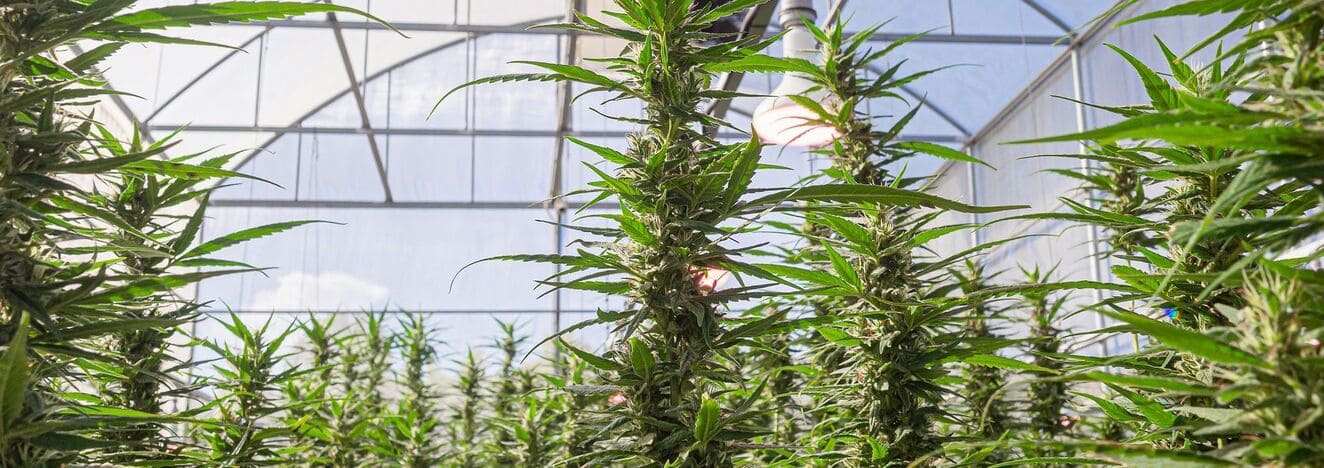
After harvesting cannabis, primary post-harvest processes include Trimming, Drying, Curing, and Storage. Each of these steps directly affects the final flavor of cannabis and the overall quality of the buds.
In this article, we focus on the cannabis drying step. It is one of the most sensitive and influential steps in the entire post-harvest process. This is because even if you grow a perfect crop, the quality and flavor can drop during drying if the humidity and temperature are not controlled properly. Unfavorable humidity and temperature levels during the cannabis drying process will lead to:
- Mold and Botrytis development
- Terpene loss and cannabinoids and cannabis aroma reduction
- Harsh smoke
- A drop in product value and quality because of uneven drying of cannabis.
To overcome these undesirable conditions, we need to create a precise and efficient drying room and consider humidity and temperature as major environmental factors that need to be regulated.
Understanding the role of humidity in the cannabis drying room
After harvest, drying rooms are built to remove excess moisture content in cannabis plants. Even though the buds are no longer growing, they continue to release a large amount of water vapor into the environment. Therefore, controlling relative humidity in cannabis drying rooms is a very important factor that should be considered. Without proper humidity management, water moisture can accumulate quickly inside the drying rooms. Thereby creating unsuitable drying conditions.
Ideal drying room humidity and temperature
According to research findings, for an efficient cannabis drying room, the ideal relative humidity range is between 50% to 60%. On the other hand, the perfect cannabis drying room temperature is between 18- 21 °C (65- 70°F).
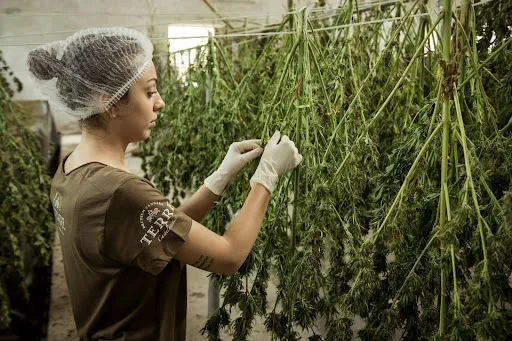
This optimal temperature and humidity range supports slow, controlled moisture release. Therefore, it allows cannabinoids and terpenes to remain stable while preventing fungal diseases. However, humidity levels rise quickly and can exceed safe levels without a dry-room dehumidifier. This is a major problem faced by both indoor and outdoor cannabis growers, and most of the time, they are unaware of why their final product is stale.
Problems when the humidity gets too high
Without proper humidity management, several common problems can arise during the drying phase.
Mold, Botrytis, and Powdery Mildew (Pathogen Development)
Mold, botrytis (bud rot), and powdery mildew are the most common diseases that can develop in the cannabis drying room when the humidity gets too high. They can spread through an entire drying batch in an instant without proper humidity control. Furthermore, strict regulations and guidelines are preventing moldy cannabis from being sold for medical or recreational use. Also, they prevent cannabis from being processed into oils, edibles, or extracts if they are moldy, as they might cause serious health hazards for the consumers. That means the entire batch becomes unusable and wasted.
Uneven drying
If multiple cannabis harvest batches enter the drying room at the same time, humidity can lead to dramatic spikes. Without a drying room dehumidifier, the drying speed becomes inconsistent. Hence, it makes it difficult to meet regulatory standards for moisture content. Ultimately, the final result can be unevenly dry buds. This negatively affects bud texture, flavor, weight, and consistency, and results in a deteriorated output.
Terpene evaporation and aroma loss
Furthermore, excess moisture content can slow down evaporation, which can:
- Damage terpenes
- Flatten flavor and aroma
- Reduce cannabinoid potency
- Lead to harsh or uneven burns
Hence, final products become low-grade and less valuable.
Why do Cannabis dry rooms need dedicated dehumidifiers?
There are two types of equipment cannabis growers use to control drying room moisture content. They either use HVAC (Heating, Ventilation, and Air Conditioning) systems or dehumidifiers. There is a growing misconception that HVAC systems can be used to control humidity efficiently.
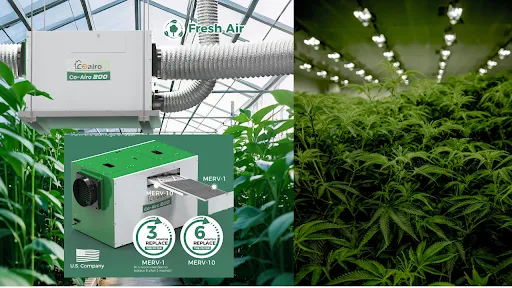
However, this is far from the truth, as the primary purpose of HVAC systems is to regulate the temperature. They can, however, regulate the humidity as a side effect. Researchers have identified that HVAC systems are inefficient at controlling humidity. Farmers are encouraged to use dedicated dehumidifiers in their drying rooms for guaranteed humidity levels. Hence, efficient and reliable commercial drying room dehumidifiers are needed for the drying process. This is necessary because:
- Moisture levels change rapidly during the first 48- 72 hours inside the drying room
- Bud density varies, requiring precise humidity control
- Seasonal humidity can cause drying uncertainty
- HVAC moisture removal is slow and energy-intensive
Therefore, using a proper commercial-grade dehumidifier, such as CoAiro 165-PPD, ensures stable, consistent humidity throughout the drying process. The table below summarizes the methods of controlling the humidity inside cannabis drying rooms.
|
Solution |
Removes Humidity Effectively? |
Comments |
|
Heating |
Reduces RH but overheats the room |
Damage terpenes and cannabinoids |
|
HVAC Cooling |
Removes small amounts of moisture |
Slow, inefficient, high energy use |
|
Dehumidifier |
Designed for fast moisture extraction |
Best for cannabis drying |
Table 02: Best Method to Remove Humidity During Cannabis Drying: Why Dehumidifiers Work Better Than Heating or HVAC
Why specialized Cannabis dehumidifiers are necessary
The CoAiro 165-PPD is engineered for environments with heavy moisture loads, such as cannabis drying rooms. It provides reliable, energy-efficient humidity control during peak harvest periods.
Top features of the CoAiro 165 :
- It has high moisture capacity, which means that it can efficiently extract a large volume of moisture during peak drying cycles.
- It can quickly restore target humidity even when plants release heavy vapor loads.
- It maintains an ideal humidity range (50-60% RH) automatically.
The result is a controlled and consistent cannabis drying room environment. Additionally, it improves final product quality and reduces post-harvest spoilage.
Best Cannabis drying practices to pair with a dehumidifier
Even with a high-performance dehumidifier such as the CoAiro 165-PPD, the overall success of cannabis drying depends on adopting the best industry practices. Several other factors, such as proper airflow, spacing, monitoring, and room hygiene, are directly influential to dry cannabis properly.
1. Ensure proper airflow
The oscillating fans in the drying room should be set on low speed to prevent pockets of air from forming. It is best not to point the fan directly at cannabis, as it will cause the outer layer to dry fast while retaining moisture inside.
2. Space buds and branches properly
It is recommended to hang cannabis branches or place the cannabis buds on racks with 2-3 inches of spacing between each piece. Also, care should be taken to avoid stacking and overlapping branches and buds on top of each other. It is necessary to ensure that the air can move freely around the buds for uniform drying.
3. Monitor humidity and temperature frequently
Even though dehumidifiers and HVAC systems keep the RH and temperature stable, they can still fluctuate. It is recommended to place hydrometers (humidity measuring equipment) at different heights inside the drying room. Also, instead of using manual meters and gauges, researchers suggest that farmers use more accurate digital meters. The moisture level is at its peak during the first 48-72 hours of the drying process. Therefore, the humidity and temperature should be checked several times during this time period.
4. Clean and sanitize the drying environment
Clean and sanitized drying surfaces reduce the risk of mold build-up and help the dehumidifiers work more efficiently. It is recommended that farmers sanitize walls, racks, and other equipment before each drying cycle. The leftover leaf waste should be disposed of immediately, as it can increase the cannabis drying room humidity and pathogen load.
Conclusion
Controlling the humidity and temperature inside the drying room is essential to produce high-quality cannabis products, whether it is for medicinal or recreational use. After harvest, the cannabis buds continue to release moisture, which leads to increased humidity levels quickly and unpredictably. It mainly affects the final product, especially during large harvest cycles.
Using a dedicated cannabis drying room dehumidifier ensures the environment remains stable, protects the product quality, and prevents mold. This also helps growers to stay compliant with industry standards.
Whether you’re running a small-scale indoor farm or a large commercial cultivation facility, investing in the Coairo dehumidifier is one of the most effective ways to achieve a healthy, disease-free product. It also preserves the terpene profile and protects the value of your harvest.