(888) 977-1520


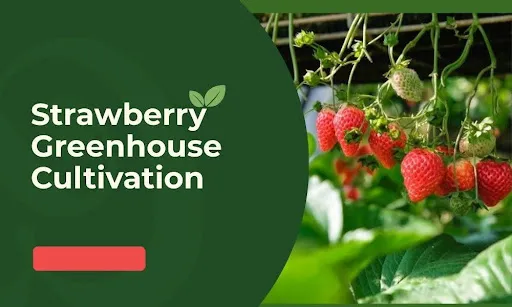
Are you planning to grow strawberries in a greenhouse? You can grow healthy berries inside your greenhouse by knowing ideal conditions and care tips.
You can grow strawberries in your greenhouses round the year in both cold or warm environment conditions. You can easily regulate the growing conditions in a greenhouse for healthy strawberry plants.
This article will guide you on how to grow strawberries in a greenhouse. You’ll also discover the optimal conditions to grow strawberries in a greenhouse.
Why Grow Strawberries In Greenhouses?
Can you grow strawberries in a greenhouse? Yes you can grow healthy strawberries indoors and get high yield. You can grow delectable fruits throughout the year. There are many benefits of greenhouse grown strawberries, some of them are:
- You can stabilize the growing factors in the greenhouse to shield the plant against pests and diseases.
- The gardeners have to encounter different challenges while growing strawberries in a field such as water-restrictions, weather and pathogens. Nurturing strawberries in a greenhouse can eradicate these concerns.
- The berries require distinct humidity and temperature limits for the growth. You can grow strawberries in the greenhouse throughout the year by providing ideal temperature and humidity conditions.
- Growing strawberries in a greenhouse also lessens the percentage of imported fruits as you can grow your own in every season. This also reduces the post harvest losses as well. Because a high percentage of strawberries are wasted during the transportation.
- You can grow rich quality strawberries inside your growth medium by controlling light intensity, CO2 concentration and temperature.
The study held in Florida to compare the profits between greenhouse and field production shows that the non-organic strawberry production can be 1.5 times greater than field production.
Similarly the organic greenhouse strawberry production is about nine and half times more than the non-organic field grown strawberries.
Strawberries Varieties You Should Grow inside Greenhouse
There are three types of strawberry such as summer fruiting strawberries, perpetual strawberries and alpine strawberries. Each type has its own flavor, fruit size and color and other characteristics.
You can experiment with all the varieties of strawberry throughout the year as all have a different harvest time.
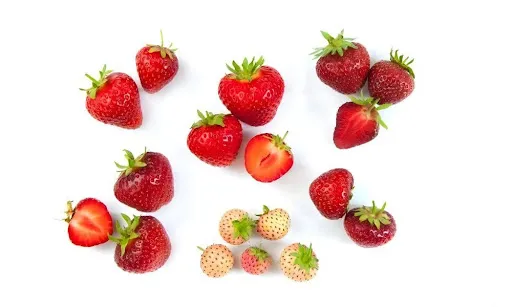
Type | Fruit Size | Cropping Period | Key Features |
Summer-fruiting | Large fruits | Two to three weeks June to August | Heavy yields Early greenhouse harvest possible |
Perpetual (Everbearers) | Medium to small | Early summer to autumn | Frequent small flushes Fewer or no runners |
Alpine | Tiny berries | Intermittent summer crops | Aromatic flavors and Red, white, yellow options |
3 Growing Systems for Strawberries
The ideal growing system is fundamental for a high yielding strawberry greenhouse. Each approach can be useful depending on your goals.
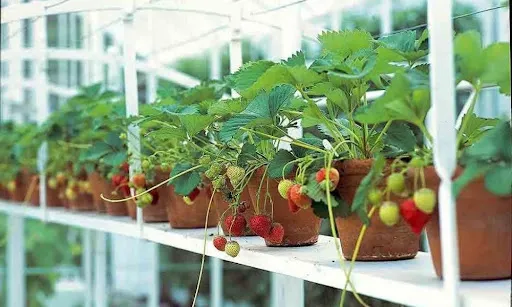
1. Fixed Gutters System
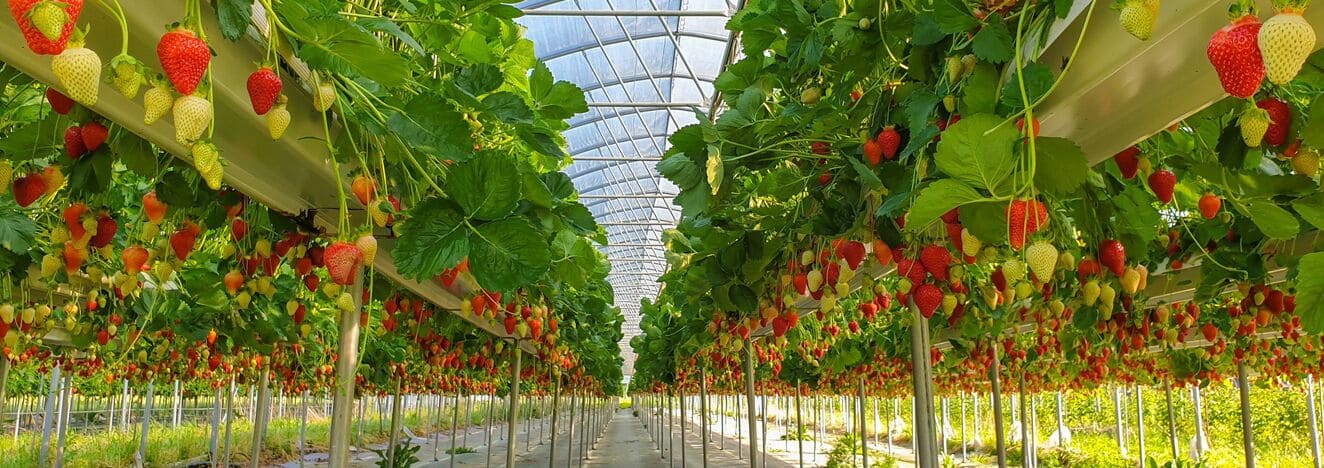
Fixed gutter systems are frequent setups in greenhouse strawberry production. Hanging gutters have easy ground access and require strong structure for gutter weight. Ground-mounted gutters are suitable for nearly all greenhouse sizes.
Hanging gutters maintain cleanliness and reduce pest issues, while ground-mounted options are for weaker greenhouse structures.
2. Mobile Gutters in Pots
Mobile gutters are a modern solution inspired by leafy greens and lettuce production systems. Gutters reduce walking distance during harvesting as they rotate toward workers. This system supports dense canopy and efficient space use.
This method dramatically improves labor efficiency. This system is ideal for medium to large commercial strawberry greenhouses.
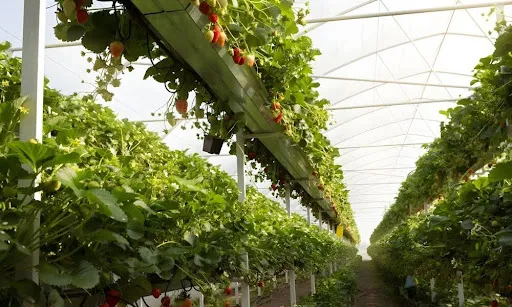
3. Multi-Layer Mobile Gutter System
This advanced system combines mobility with vertical production, maximizing yield per square meter. Additional lower layer plants are grown by LED lights while the upper layer receives natural sunlight which doubles production per greenhouse.
Ideal Conditions For Strawberry Greenhouse Production
So what climate do strawberries grow in? The growth of strawberries in the greenhouse depends on controlled growth conditions. By stabilizing ideal conditions in the growth medium, you can extend the fruit supply beyond the summer.
Optimal Temperature
The gardener has to encounter different challenges such as fluctuation in temperature and weather in case they propagate strawberries in a field. Greenhouses address these challenges by providing ideal conditions in a controlled environment.
The research shows that high temperature (40°C) is damaging while a moderate temperature like 30°C is good but shouldn’t continue for more than 2 weeks. At 20°C, the strawberry gives optimal yield.
Strawberries need varying temperatures at different periods of maturation. The optimal temperature ranges can also depend on moisture and light exposure.
You can stabilize the temperature in the greenhouse for a higher yield of strawberries. The strawberry plant initially needs 16° C temperature during the day hours.
Stage | Day Temperature | Night Temperature | Effect |
Vegetative Growth | 18–22°C | 10–12°C | Strong leaf and root development |
Flower Initiation | 15–18°C | 8–10°C | Encourages healthy flower formation |
Fruit Set | 18–20°C | 10–12°C | Supports pollination and berry formation |
Fruit Development | 20–24°C | 12–14°C | Faster growth and size improvement |
Ripening | 22–26°C | 14–16°C | Enhances sweetness and red color |
The strawberry needs gradually increasing temperature like at the start of season. So you can increase the temperature gradually reaching 22-26°C during the daytime.
Humidity
Ideal humidity range is fundamental for healthy strawberry plants as well as for protection against the pathogens, plant diseases and mold. These diseases can decay the plants and cause economic losses at large scale.
Maintaining the ideal conditions can lower the use of fertilizer and fungicides to prevent diseases. This will give you organic strawberries.
Strawberries need varied moisture levels at different stages of the development. You can stabilize the moisture inside the growth medium using ventilation fans and Coairo greenhouse dehumidifiers.
The research shows that growth of five strains of Botrytis cinerea and three strains of Sclerotinia depends on relative humidity and temperature. These pathogens can survive up to 12 months if the relative humidity is above 95% RH.
Stage | Humidity Range | Notes |
Optimal Growth | 60–75% RH | Best general plant growth |
Flowering Stage | 50–60% RH | Reduces pollination issues |
Fruit Development | 60–70% RH | Prevents fruit cracking issues |
Disease Prevention | Below 70% RH | Lowers Botrytis risk |
High Humidity Risk | Above 80% RH | Causes mold and rot |
Light
Strawberries need direct sunlight for their development. But gardeners should also introduce shading during the hot months of the year. This will reduce the risks of excessive heat.
While during colder months, you need extra LED lighting to keep your greenhouse warm. This will ensure that you can get the strawberry throughout the year.
The studies reveal that high intensity LED lighting elevates the yield as well as quality of greenhouse grown strawberries.
By knowing the difference between evapotranspiration and transpiration, you can manage water needs of your plants. Here is the quick data table of the difference between evapotranspiration and transpiration;
Feature | Evapotranspiration | Transpiration |
Definition | Total water loss from land surface and plants combined | Water loss only from plant leaves |
Components | Evaporation and transpiration | Only transpiration |
Source of Water Loss | Soil, water bodies and plants | Plant leaves and stems |
Process Type | Combination of physical and biological processes | Entirely biological process |
Influencing Factors | Sunlight, wind, temperature, soil moisture, plant type | Plant health, stomatal opening, humidity, temperature |
Measurement | Used in hydrology and irrigation planning | Used in plant physiology studies |
Scale | Landscape or ecosystem level | Individual plant level |
Impact on Environment | Affects water cycle and climate | Affects plant growth and cooling |
Example | Moisture rising from soil and plants in a field | Moisture released by leaves of a tree |
Maintaining a Healthy Strawberry Greenhouse
Your strawberries need care and attention for high quality fruit yield. Strawberries need ideal conditions to protect against the pathogens, molds and plant diseases.
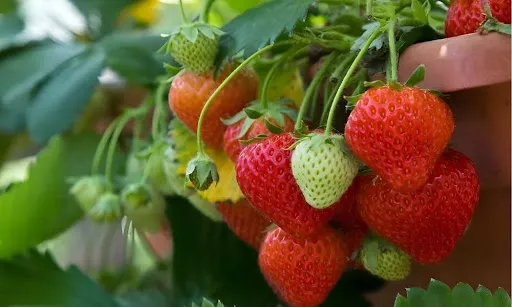
Feeding
Strawberries need high Potassium fertilizer if your plant is weak or nutrient deficiency. Usually the plant doesn’t need any fertilizer if you’re mulching the soil regularly. You should begin with common liquid fertilizer and then use the high potassium fertilizer in the later development stages.
Watering Practices
The young seedlings need the water regularly. Water your strawberries during the prolonged dry periods. Avoid watering the crown branches as it can increase the chance of mold.
Use drip irrigation as the over watering can keep the leaves and fruit moist for several hours which can provide the environment for growth of pathogens especially Botrytis.
Mulching
The close to ground growth of strawberries make them more prone to the pathogens and plant diseases. Utilize the mulching to protect the berries against the pathogens like Botrytis cinerea.
You can use dry organic matter such as straw to mulch the strawberry beds. The straw keeps your plants dry and off from contaminated ground.
Protect the Flowers
The strawberry can be affected by the late frost in winter and different birds. You can protect the fruit by making a structure around the strawberries. Then cover the structure with plastic free netting.
Conclusion
Growing strawberries in a greenhouse can give you many benefits as you can control the humidity, temperature and pests. It gives you more production than the field grown strawberries.
You can experiment with different varieties of strawberry and get the fruit round the year. You can use a fixed, mobile and multiple layer gutter system according to your scale of production.
To maintain an ideal humidity level and for optimal temperature, you can incorporate a dehumidifier in greenhouse. This will ensure your strawberries grow health and give high yield.