(888) 977-1520


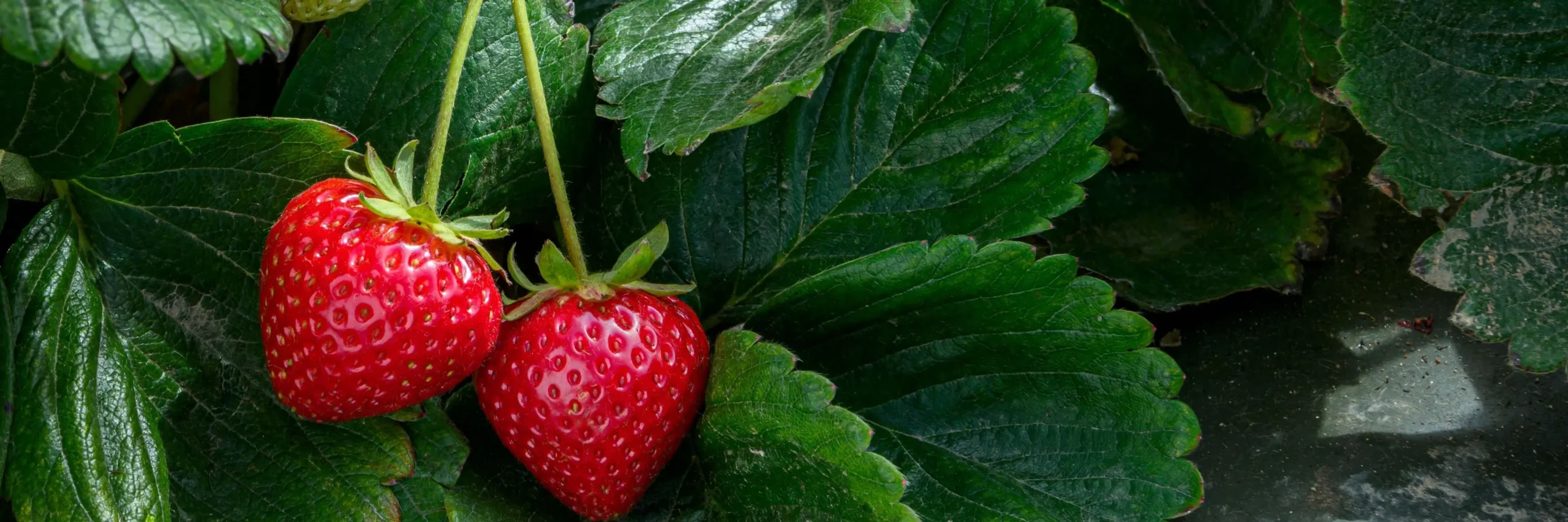
Strawberries are strong plants that can grow and survive for many years. They produce sweet, delicious fruit that is relatively easy to cultivate. It is a suitable crop for both gardeners and farmers. However, strawberry plants can easily be affected by a variety of pests and diseases. Common diseases on strawberry plants include Angular Leaf Spot, Anthracnose, Powdery Mildew, and Fusarium wilt. These diseases can damage the fruit, flowers, leaves, roots, and crown of the strawberry plant. If the infection becomes more severe, the entire plant can weaken and eventually die.
Bacteria, fungi, mold, and viruses cause most strawberry plant diseases. Many diseases can be treated once symptoms appear, but some serious diseases cannot be cured once the plants are already growing in the field. For this reason, many home growers and organic farmers use natural and preventive methods to reduce diseases in strawberry plants.
In this article, you will learn how to identify common diseases and how to manage bacteria and fungi on strawberry plants using simple, organic practices.
Major Common Diseases of the Strawberry Plant
Angular Leaf Spot
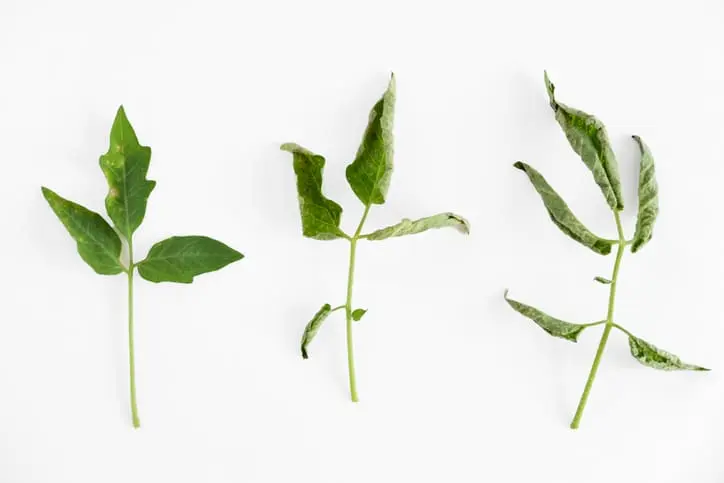
This is a bacterial disease that affects strawberry leaves and the small green caps around the fruit. It spreads easily in cool and wet conditions and through infected planting material. Even splashing water can cause angular leaf spots in strawberry plants.
Symptoms
The first signs appear as small, water-soaked spots on the underside of the leaves. Later, the leaf turns purple or red in an angular pattern from the stem, and yellow areas may develop around the infected parts. In rare cases, the whole plant may suddenly die. Usually, fruit production is only slightly reduced, but the disease weakens the plant.
How to Prevent Angular Leaf Spot Disease
Several methods can be taken to prevent or reduce the spread of this disease. Copper-based sprays help control the disease in young plants. Validamycin can be used in mature plants.
Clean and disease-free transplants should always be used for planting, while infected plants and plant debris must be removed and destroyed immediately. Also, always try to avoid overhead watering as it helps to slow down the spread of bacteria. Care should be taken to disinfect all garden tools before use.
Anthracnose
Anthracnose is a serious strawberry fungus. It can affect all parts of the strawberry plant, including the crown, stems, leaves, and fruit. It grows quickly in warm, humid conditions.
Symptoms
This disease can be identified by an orange, sticky spore mass on the infected parts of the plant. These spores spread mainly through rain and overhead watering. This fungus can survive in the soil for up to nine months after an infected plant dies.
How to Prevent Anthracnose
To prevent the spread of Anthracnose in strawberry plants, they should be treated with chemical fungicides before planting. Additionally, soil can also be treated before planting to reduce the risk of disease. Farmers cover the soil with black plastic during the hot summer months to kill the fungus using heat. After planting, overhead watering should be avoided as much as possible to prevent water splashing.
Importantly, strawberries should not be planted near crops such as tomatoes, peppers, and celery, as these crops can carry the disease. This disease can be reduced by choosing a good planting location. Currently, there are no fully organic chemicals that can kill Anthracnose.
Leather Rot
Leather rot is a fungal disease that causes brown spots on strawberries. It can infect strawberries at any stage, including green and ripe fruits. This disease is more common during cool and wet weather. Home gardeners can lose many fruits if proper care is not taken.
Symptoms
Brown spots appear on strawberries, especially on immature green and white fruit. On ripe fruit, the spots may look dark brown or purple. Infected berries often develop a bad smell and an unpleasant taste.
The fungus lives in the soil, and the fungal spores splash onto the fruit during rainy seasons. If water stays on the berries for a long period of time and the temperature is between 62°F-77°F (16-25°C), infection can happen. Wet months, such as April, May, and June, increase the risk of disease.
How to Prevent Leather Rot
A well-drained field should be selected for planting the strawberry crops. Farmers often use a thick layer of clean straw mulch to stop soil splash and keep fruit off the ground. Strawberry plants should be given full sunlight and kept away from shady areas.
Proper spacing must always be maintained between the plants as it improves air flow and fast drying. All infected fruits should be removed and destroyed immediately to stop the spread. Additionally, excessive nitrogen fertilizer has to be avoided because it causes dense leafy growth.
Botrytis Fruit Rot (Gray Mold)
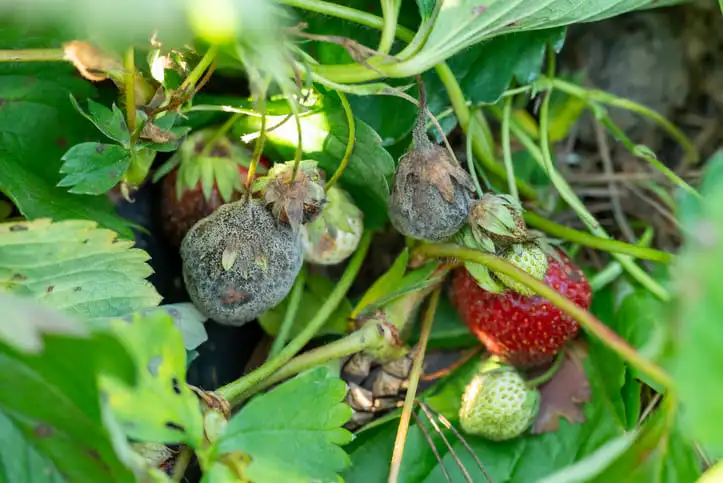
Botrytis Fruit Rot (Gray Mold) is one of the most common problems for strawberry growers in many countries. This fungus is unique because it can infect flowers and fruit before or after harvest. It spreads quickly in cool and humid weather.
Symptoms
The disease turns healthy red strawberries into soft fruits covered with gray mold. Infected berries become watery, rotten, and inedible.
The fungal spores land on mature leaves and wait until they start to die. When the leaves decay, new spores are produced and move to flowers.
The fungus stays dormant inside the flower until the fruit begins to form and produce sugar. As the fruit becomes sweet, the fungus grows rapidly.
How to Prevent Botrytis Fruit Rot
To prevent fruit loss caused by botrytis, farmers harvest and chill strawberries immediately after picking. Fruits are stored at 32–37°F (0–3°C). They also remove any moldy berries immediately to protect healthy fruits. In the farm, a wide spacing must be maintained between the plants for good air circulation. Strawberry plants are often grown in hanging baskets or along raised bed edges for better airflow and sunlight. All mummy berries and dead plant parts should be removed from the field.
If strawberries are grown in a greenhouse, farmers usually increase night temperature to about 77°F (25°C) two to four times a week. They use fans on a timer to ensure proper airflow. Buying a Coairo Greenhouse Dehumidifier is also a great option. It helps keep the humidity in your greenhouse consistent during both daytime and nighttime, typically within 60–65%.
Verticillium Wilt
Verticillium Wilt is a soil-borne fungal disease. It lives in soil and can remain inactive for many years. It attacks strawberry plants through their roots.
Symptoms
The first symptoms are yellowing and wilting of lower leaves. As the disease spreads, the whole plant begins to wilt. At the final stage, strawberry plants may stop growing and die because this disease blocks the plant’s water flow. Verticillium wilt causes the infected plant to weaken and eventually die slowly.
How to Prevent Verticillium
Strawberries are known to grow best in well-drained and fertile soil. It reduces the risk of infection.
Old and dead strawberry plant debris should be regularly removed from the garden, and avoid planting strawberries in soggy, compacted, or poorly drained areas.
Strawberry farmers practice crop rotation and avoid replanting strawberries in areas that were previously infected with Verticillium Wilt. It is recommended to choose Verticillium-resistant strawberry varieties, such as ‘Albion’ and ‘Camino Real’, for growing.
Powdery Mildew
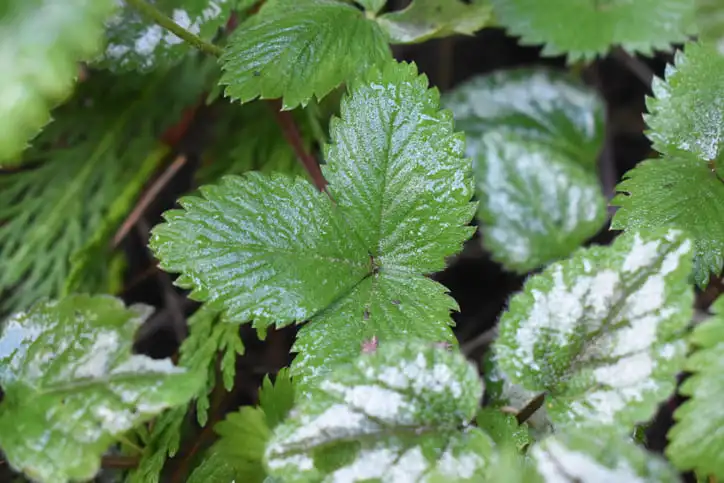
Powdery Mildew is similar to botrytis, but it grows best in warmer weather. Therefore, powdery mildew is more common in areas with warm and humid conditions. However, its development slows when leaves remain wet for long periods due to rain or overhead watering.
Symptoms
Powdery Mildew is known to affect young leaves, flowers, and developing fruits because it prefers young and growing tissue. The first sign of powdery mildew is small, white, fluffy patches on leaves. As the disease spreads, young leaves begin to curl upwards. As the colony of mildew grows and ages, the lower leaf surface turns purple and then red, while purple, red, and brown spots appear on the upper surface. When the disease becomes severe, it produces tiny spores. These spores can spread easily to flowers and fruits. Therefore, infected flowers do not grow properly and are often unable to produce fruit. If young berries are infected, they also stop growing. Fruits that are already well developed are usually safe, but the seeds can still become infected. Therefore, affected strawberries may look rough and have an unpleasant, moldy taste.
How to Prevent Powdery Mildew
It is recommended to buy healthy, disease-free plants from reliable sources to prevent powdery mildew. Overcrowding spreads powdery mildew quickly, so care should be taken to prevent overcrowding and maintain air flow between plants.
More resistant strawberry varieties, including ’Albion’, ‘Seascape’, and ‘Chandler’, should be chosen as they are more resilient to this disease. As preventatives, sulfur, insecticidal soap, or a baking soda solution can be applied. Although chemical fungicides are available, they are usually more suitable for commercial farmers than home gardeners. As for fertilizer, excessive use of nitrogen fertilizer should be avoided.
Fusarium Wilt
Fusarium wilt is a serious fungal disease that can destroy an entire strawberry crop. It originates from the soil that becomes especially active in hot and dry conditions. It can enter strawberry fields through contaminated soil, compost, or tools.
Symptoms
If the disease develops, it may be possible to notice slow plant growth, stunted plants, wilting older leaves, and brown discoloration inside the crown. Sometimes it only reduces yield, but sometimes it can kill an entire strawberry bed or field during heat and drought stress.
How to Prevent Fusarium Wilt
It is recommended to always buy healthy transplants from trusted nurseries to prevent Fusarium wilt. Farmers sometimes grow broccoli in rotation with strawberries because the leftover broccoli material helps reduce the fungus. Additionally, Fusarium wilt-resistant strawberry varieties, such as San Andreas and Ventana, should be chosen for planting. Furthermore, all tools must be disinfected before using them in a clean field.
Conclusion
Strawberry diseases can spread quickly, but most problems can be managed when growers pay attention to early signs and follow basic prevention methods. Proper care reduces strawberry fungus, wilts, and mold on strawberry plants. It helps growers to maintain a healthy and productive harvest.