(888) 977-1520


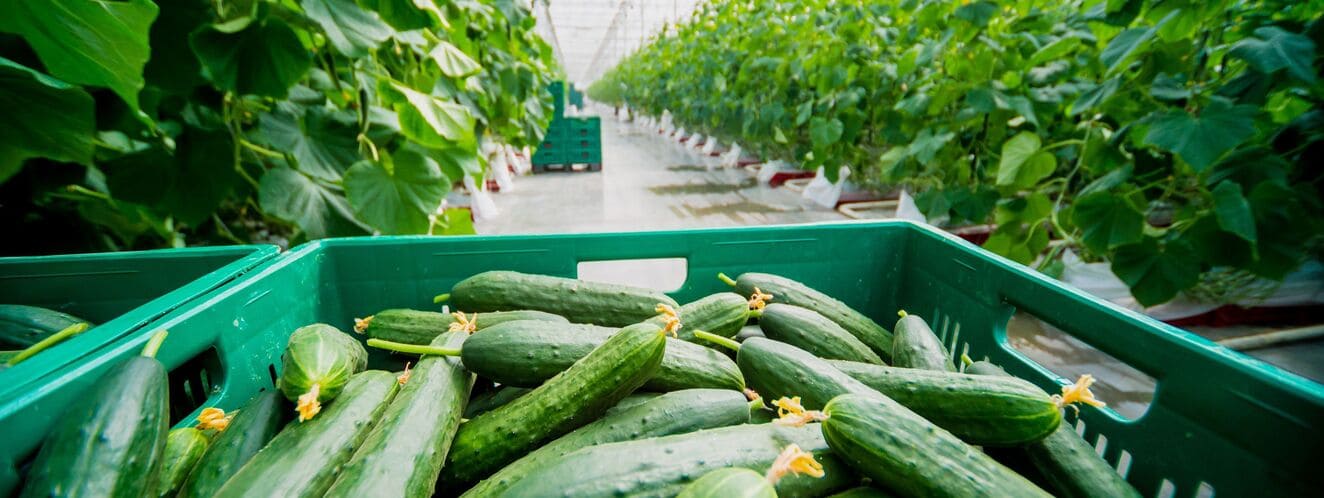
Many people ask; “can cucumbers grow in a greenhouse?”. Cucumbers belong to the Cucurbitaceae family. This vegetable grows extensively in the world. Greenhouse cucumbers are the best way to lengthen the cultivation season and crop quality.
Cucumbers are usually grown in warm environments as they are sensitive to low temperatures and fluctuation in humidity. You have to maintain moisture and warmth inside the greenhouse to avoid plant diseases and pathogens attack.
Research shows that low temperatures (9-5°C) and high humidity (95%) affects photosynthesis, Photosystem II activity, antioxidant protection, ROS levels and hormonal balance in young cucumber plants.
In this article, we’ll examine the best varieties of greenhouse cucumber, growing systems and ideal conditions for greenhouse cucumber production.
Best Cucumber Varieties for Greenhouse
The cucumbers have different varieties with varied size, colors, taste and pest resistance. They can be mini little globes or long, seedless or seeded. You can have green, yellow, white or even brown cucumber varieties. Here are some of the best greenhouses cucumber varieties:
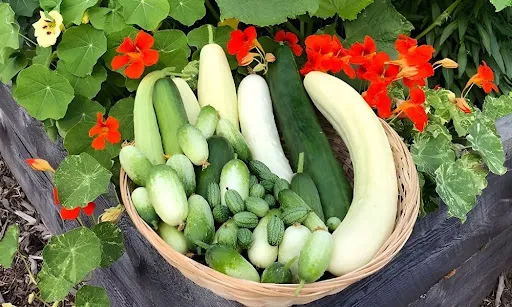
English Cucumber: These are also called European and Japanese cucumbers. These cucumbers have soft and smooth texture with thin peel. They are usually long cylindrical in size about 12 to 24 inches. This is the best cucumber variety for the greenhouse.
Kirby Cucumber: This is the small and mini variety of cucumber which is used for pickles. These cucumbers are yellow to deep green in color.
Persian Cucumber: This type of cucumbers are small in size and bitter in taste. These seedless vegetables are also called burpless cucumbers.
Growing System For Greenhouse Cucumbers
You can grow vine crops in substrate based systems. Many farmers are switching from soil to soilless media like cocopeat, rockwool, perlite, because soil-borne diseases are difficult to control. There are three main systems which are used in greenhouse cucumber production.
System | Description | Suitable Substrates | Key Features |
Dutch Bucket | Plastic bucket with drainage hole for nutrient flow | Perlite, Pine bark | Allow nutrient recirculation; durable and reusable |
Bag Culture | Plastic bags filled with substrate; drainage holes underneath | Perlite (most popular), Pine bark | Bags placed horizontally/vertically; holes cut on top for transplants |
Nursery Pots | 3–5 gallon pots used commonly in nurseries | Perlite, Pine bark | Simple setup; widely available and easy to manage |
Slab Culture | Plants grown in Rockwool slabs | Rockwool | Excellent water retention; strong root anchoring |
Best Conditions for Growing Cucumbers in a Greenhouse
Many farmers ask; “Can I grow cucumbers in a greenhouse?” Or “Is year round greenhouse cultivation possible?” You can extend the cultivation period of cucumbers by cultivating them in a greenhouse. Cucumbers need stable growth parameters for their development.
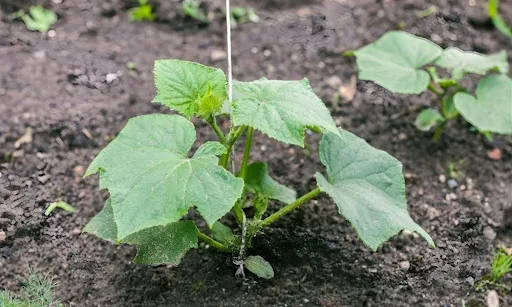
Temperature
The major benefit of growing cucumbers in a greenhouse is that you can easily warm or cool down the temperature. The cucumber needs a warm environment as it is a summer season crop.
The cucumbers are sensitive to low temperatures and frost. In cold conditions, the cucumbers can be subjected to wilting. Like other plants, cucumbers also need warmer temperatures during day time as compared to night time.
The study examined how different day and night temperature combinations affect young cucumber. Researchers found that plant development slowed when the day temperature was lower than the night temperature, while higher average daily temperatures (ADT) promoted faster growth.
The ideal temperature to grow cucumbers in a greenhouse ranges between 21-26°C. However the vegetable can survive within 15-29°C temperature range.
The ideal temperature range can be varied for different greenhouse cucumbers varieties. Here is the general table for ideal temperature for greenhouse cucumbers production:
Growth Stage | Temperature (Day) | Temperature (Night) | Effect |
Seed Germination | 25–28°C | 20–22°C | Warm environment speed up germination |
Early Vegetative Growth | 22–25°C | 18–20°C | Promote strong leaf and root development |
Flowering Stage | 23–26°C | 18–20°C | Stable temperatures improve pollination |
Fruit Set & Development | 24–27°C | 18–20°C | Encourage uniform fruit growth and shape. |
Maximum Tolerable Temperature | 30–32°C | 21-22°C | Above this, plants may stress and reduce yield. |
Minimum Tolerable Temperature | 15–18 °C | 14–16°C | Growth slow or stop |
Humidity
You need to stabilize optimal water content if you’re planting cucumbers in a greenhouse. Fluctuation in humidity can encourage delayed fruit setting, plant diseases and pathogens growth.
Many farmers wonder “can you grow cucumbers in a greenhouse if the humidity is high?”. Humid conditions lead to growth of pathogens and mold. Pathogens like Botrytis and powdery mildew become more prevalent. High moisture level also impacts the rate of transpiration as well.
Cucumbers need 60-70%RH for stable growth. Here is the general humidity levels for greenhouse grown cucumbers;
Growth Stage | Ideal Humidity | Effect |
Seed Germination | 80–90% RH | High humidity improves seed sprouting and early root development. |
Vegetative Growth | 70–80% RH | Supports healthy leaf expansion without causing moisture stress. |
Flowering Stage | 65–75% RH | Slightly lower humidity reduce fungal risks and improve pollination |
Fruit Set & Development | 70–80% RH | Maintain fruit quality and prevent dehydration of developing cucumbers |
Nighttime Humidity | 75–85% RH | Prevent mildew and fungal diseases |
Critical Upper Limit | >90% RH | High risk of powdery mildew, downy mildew, and botrytis growth |
Critical Lower Limit | <55% RH | Cause leaf curling, reduced growth and poor fruit set |
Low humidity can impact the growth of cucumbers. Plants undergo stress because of low moisture levels and increased the rate of evaporation. The plants slow down all the processes needed for the growth. The plant retains the water and shows poor growth. Low humidity also affects the pollination as it makes the pollen dry.
The research shows that greenhouse cucumber production is affected by many factors such as temperature, humidity, light, evapotranspiration, vapour pressure deficit and plant stomatal behavior. Other major production factors include irrigation, fertigation, disease pressure, electricity costs, fuel expenses and labor costs.
How to Take Care of Greenhouse Cucumbers?
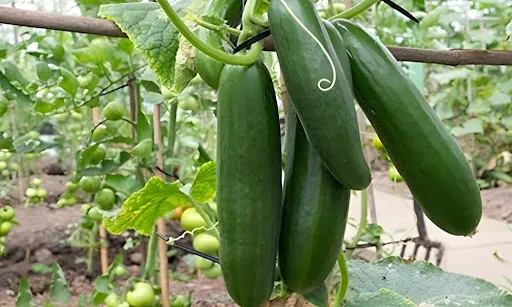
Cucumbers need steady water availability and elevated temperature to grow in a greenhouse. Here are some tips for healthy cucumber greenhouse cultivation:
Feeding
The cucumbers don’t need feeding if the soil is nutrient dense. If you’re growing cucumbers in containers and the soil is poor, then feed your plant after every 14 days. Start with liquid fertilizer then switch to high potash liquid fertilizer when cucumbers start flowering.
Pruning
You can pinch out shoots to increase fruit growth. You need to pinch out the flower less shoots and side shoots beyond a female flower. Cut the shoots that start to touch the roof of the greenhouse.
Mulching
You can use a thick mulching layer at the soil beds of cucumber plants. This will help the plant to retain moisture and decrease the watering practices. Make sure to leave space around the base of stems.
Improving Airflow
You need proper airflow inside the greenhouse to prevent higher humidity levels. In a closed environment, moisture level can rise up easily.
When plants are packed together, they can induce a microclimate. These dense foliage can trap stagnant air.
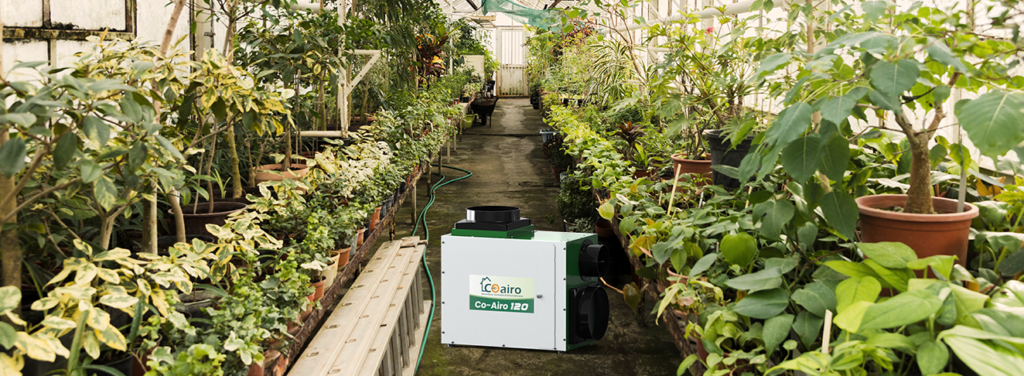
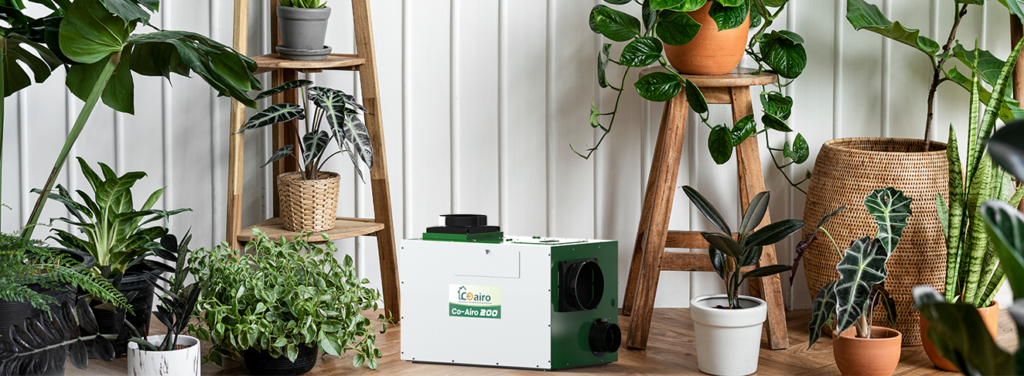
You can use a dehumidifier in your greenhouse to optimize air movement and wetness. This also inhibits the bacterial growth in plants.
Conclusion
You can get the cucumbers round the year if you prefer greenhouse cucumbers cultivation. You can choose english or pickling cucumbers to grow in a greenhouse.
The cucumber plants need warm and humid environmental conditions. These vegetation are sensitive to frost and low temperatures. So, fluctuations in environmental conditions can cause poor growth and bacterial diseases.
Farmers should use Coairo dehumidifier in the greenhouse to improve airflow and inhibit pathogens growth.